What to Expect When Living in Bellingham, WA
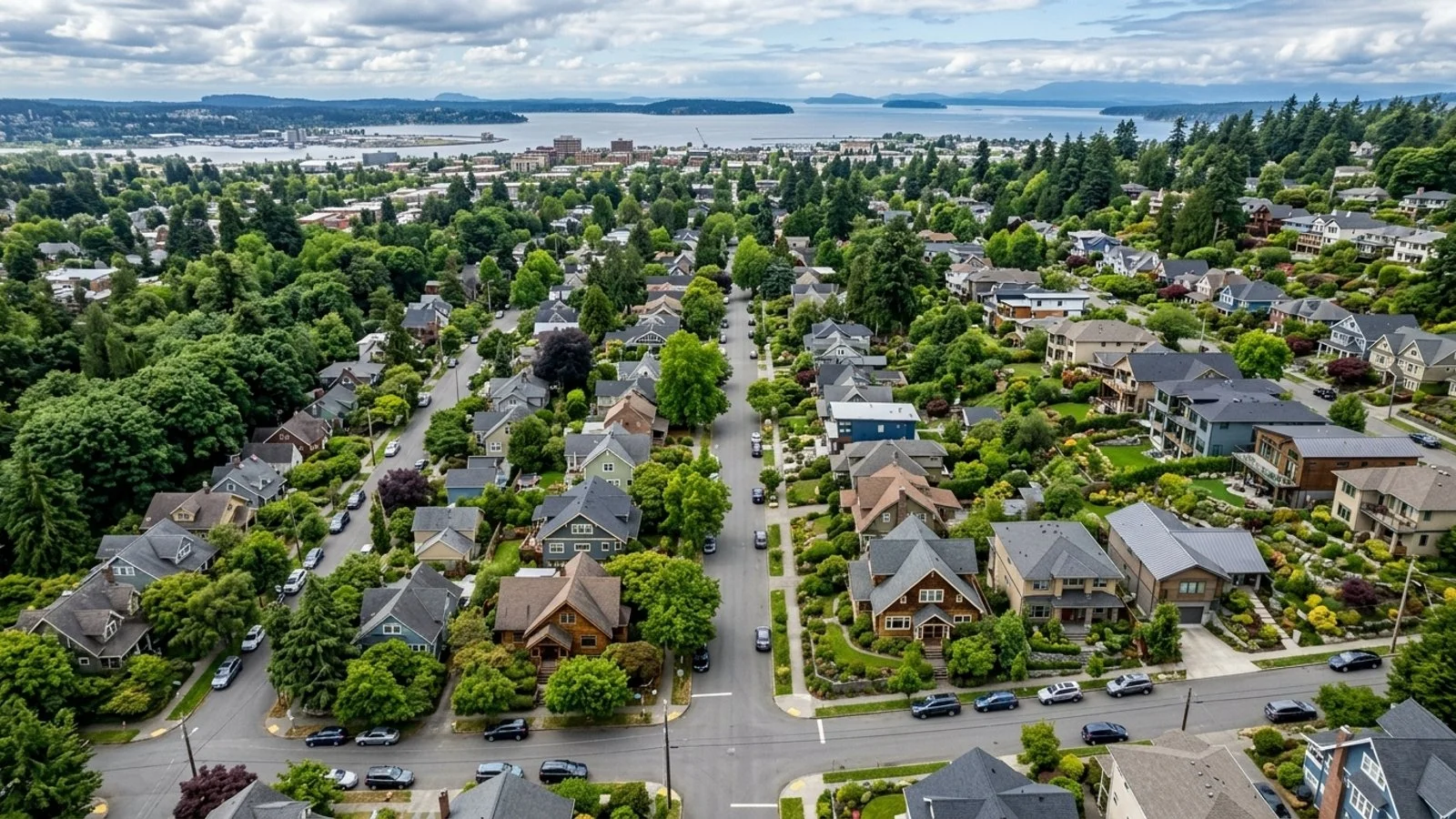
If you are buying a home in Bellingham, WA, you will find a city that sits in the northwestern corner of the state, where it serves as the county seat of Whatcom County and the primary economic and cultural hub between the Seattle metro and the Canadian border. The estimated population as of 2026 is over 99,000 - large enough to have real infrastructure, small enough that it doesn't feel anonymous.
If you're weighing a move here, the two things that tend to catch buyers off guard are how quickly homes move - a median of just 16 days on the market recently - and how far housing costs stretch beyond local wages. Both are worth understanding before you fall in love with a listing.
Getting to Know Bellingham, WA
Bellingham anchors a broader metro area of roughly 236,000 people and functions as the administrative center of Whatcom County. The local economy draws a mix of long-time residents, working professionals, and retirees, and the infrastructure reflects that range.
Newer residential developments sit alongside established commercial districts. People relocating here consistently prioritize three things: outdoor recreation access, proximity to healthcare, and regional transit routes.
The Local Lifestyle
Waterfront access along Bellingham Bay, nearby mountain trails, and an extensive park network give residents a genuine outdoor lifestyle year-round - not just on weekends. The downtown core handles daily retail, restaurants, and entertainment, and the community has a well-developed local arts scene with regular public events.
For everyday errands, you'll find multiple grocery chains, local markets, and specialized medical centers without having to leave the city.
Who Moves to the Area
The buyer pool here is genuinely varied - regional commuters, people seeking dedicated senior living communities, and families at different life stages. The housing inventory reflects that, with single-family homes, townhouses, and assisted living facilities all represented.
If schools in Bellingham are a priority, check the specific zoning boundaries for any property you're considering, since enrollment follows those lines. Proximity to regional medical centers is also a practical factor for anyone who needs regular healthcare access.
Where Bellingham, WA is Located
Bellingham sits on the coast of Bellingham Bay in northwestern Washington - the largest city in Whatcom County and the last significant urban stop before the Canadian border. Interstate 5 runs directly through the city, serving as the main north-south arterial for commuters and freight alike. Most regional travel planning starts and ends with that highway.
Commuting to Seattle and Vancouver
Seattle, WA is about 90 miles south via Interstate 5. How long that takes depends almost entirely on Seattle's traffic patterns at the time you're driving.
Vancouver, BC is about 55 miles north, and residents cross regularly for international flights, shopping, and recreation. Border wait times are real and variable - time of day and season matter.
Getting Around Town
Inside city limits, arterial roads connect the downtown core to residential neighborhoods and commercial centers. The Whatcom Transportation Authority runs public bus service throughout Bellingham and into neighboring towns. Bike lanes and pedestrian pathways are built into many neighborhoods, and the downtown core and Fairhaven district are genuinely walkable - you don't need a car for everything if you're based in those areas.
The Cost of Living in Bellingham, WA
The numbers here are consistent across sources, and they all point the same direction. BestPlaces scores Bellingham at 117.5, meaning expenses run roughly 17.5% above the U.S. average. RentCafe puts the gap at 23% above the national baseline. AreaVibes goes further, placing the index at 38% above the national average.
Housing is the main driver, but everyday goods and services in the Pacific Northwest carry regional pricing too - it's not just the mortgage.
Local Housing and Home Prices
The market is competitive in a way that's hard to fully appreciate until you're in it. Recent MLS data from late summer 2026 shows a median sale price of approximately $662,000, with homes sitting on the market for a median of just 16 days. The average sale-to-list ratio is 98.9%, and over 40% of homes sell above asking. There are only 2.7 months of supply available. That's a seller's market, and buyers need to show up prepared.
Everyday Expenses
Utilities, groceries, and transportation all run higher here than in much of the country. One meaningful offset: Washington doesn't collect a personal income tax, which helps working professionals more than it helps retirees on fixed incomes.
Property taxes fund local services and infrastructure, and assessed values tend to track the rising market. Factor that annual cost into your monthly budget from the start - it's not a line item you want to discover later.
Crime Rates and Safety Data
The picture here isn't simple, and it's worth looking at it honestly rather than averaging it away. City-Data reports a 2025 crime index of 220, which is comparable to the U.S. average and represents a 19% drop from the previous year. On violent crime specifically, BestPlaces rates Bellingham at 18.8, below the national average of 22.7.
Property crime is where Bellingham diverges from the national norm. BestPlaces rates local property crime at 71.5, well above the national average of 35.4. That gap is significant and affects daily life in tangible ways.
Reviewing the Statistics
NeighborhoodScout reports an overall crime rate of 42 incidents per 1,000 residents. AreaVibes, drawing on recent FBI data, cites a rate of 4,107 per 100,000 residents - above the national average for total incidents.
Before you settle on a neighborhood, pull the local police department's heat maps and incident reports. Vehicle break-ins and theft are the most documented issues, and their distribution across the city isn't uniform.
Neighborhoods to Consider
The city has several distinct neighborhoods with different characters and price points. Cordata, in the northern part of the city, features newer developments and planned residential areas. Edgemoor sits near the bay. Squalicum Valley is another established option. Downtown Bellingham offers denser housing - condos and apartments - with strong retail and transit access right outside the door.
Population and Demographics
The Washington State Office of Financial Management estimated Bellingham's population at 99,030 as of April 2026. The broader Bellingham metro area, covering all of Whatcom County, holds roughly 236,392 residents. The city has held steady growth over the last decade, supported by a local economy centered on healthcare, education, and regional retail.
Income and Household Statistics
The median household income sits at approximately $66,755, with a per capita income of $50,271. The local poverty rate is around 18.6%, though family-specific estimates track closer to 8.9%.
Set those income numbers next to the $662,000 median home price and the affordability challenge becomes concrete. Buyers coming into this market typically need substantial down payments or above-average dual incomes - often both - to qualify at current mortgage rates.
The Pros and Cons of Relocating Here
The case for Bellingham is straightforward: immediate access to serious outdoor recreation - the San Juan Islands, Mount Baker, extensive local parks - combined with a location that puts both Seattle and Vancouver within reach without requiring you to live in either city. That's a real quality-of-life combination.
The case against it is also straightforward.
The Drawbacks
Home prices routinely exceed $660,000, and local wages don't stretch far enough to make that feel comfortable for most first-time buyers. The elevated property crime rate is a daily consideration that requires real precautions with vehicles and belongings. And the winters here are long, overcast, and wet - if you're relocating from a sunnier climate, that's an adjustment that some people genuinely don't make peace with.
Recreation and Local Amenities
The outdoor infrastructure in Bellingham is substantial - trails, lakes, and coastal parks that support hiking, cycling, and boating across all four seasons. The city maintains an extensive network of these spaces, and residents use them.
The downtown district and the historic Fairhaven neighborhood serve as the main commercial hubs for shopping and dining. Independent businesses make up a large share of both.
Dining and Nightlife
The restaurant scene leans on independent cafes, seafood, and farm-to-table concepts. The city is also known for a high concentration of local breweries and taprooms - that's not an accident or a trend, it's a settled part of the local identity.
Evening entertainment skews casual. Local music venues, neighborhood bars, and community events drive the nightlife here, not large clubs. If you're coming from a major urban market expecting that kind of scene, manage your expectations accordingly.
Senior and Retirement Living Options
Bellingham draws retirees looking to downsize in the Pacific Northwest, and the city's healthcare infrastructure - anchored by regional medical centers - is a genuine draw rather than just a talking point. The housing inventory accommodates older adults well, with single-story homes in planned developments alongside dedicated senior living communities.
Assisted Living and Care Facilities
For those who need additional support, the city has several assisted living facilities and continuous care retirement communities offering tiered medical support, meal services, and organized social programming. Demand is high. If you're evaluating assisted living options in Bellingham, WA for a family member, tour multiple facilities and get on waitlists well before you need them.
Frequently Asked Questions
What is the cost of living in Bellingham, WA?
It's notably above the national average across the board. Estimates range from 17.5% to 38% higher than the U.S. baseline, with housing costs doing most of the work.
What is the crime rate in Bellingham, WA, and is it safe?
Violent crime falls below the national average. Property crime is the documented issue - BestPlaces reports a local property crime index of 71.5, compared to the U.S. average of 35.4. That's a meaningful gap.
What are the pros and cons of living in Bellingham, WA?
The main advantages are the outdoor recreation access and the location between Seattle and Vancouver. The primary drawbacks are the high cost of housing relative to local wages and the elevated property crime rate.
Is Bellingham, WA a good place to live for families or retirees?
The city offers real amenities for both groups - extensive parks, regional medical centers, and a range of housing types. Retirees specifically benefit from a variety of dedicated senior living and assisted care facilities, though demand for those facilities runs high.
How long is the commute from Bellingham, WA to Seattle or Vancouver?
Seattle is about 90 miles south on Interstate 5 - plan on roughly 90 minutes to two hours depending on traffic. Vancouver, BC is about 55 miles north, but border crossing times can extend that trip considerably depending on when you go.
Are utilities expensive in Bellingham, WA?
Everyday expenses including utilities in Bellingham, WA run higher here than in much of the country. You should factor these elevated regional costs into your monthly budget from the start.
How does Bellingham compare to neighboring towns?
Many buyers evaluate the city against neighboring Whatcom County communities before finalizing their plans. While Bellingham serves as the primary economic hub, surrounding towns offer different residential environments connected by regional transit.