Understanding Mortgage Rates in Bellingham, WA for This Year
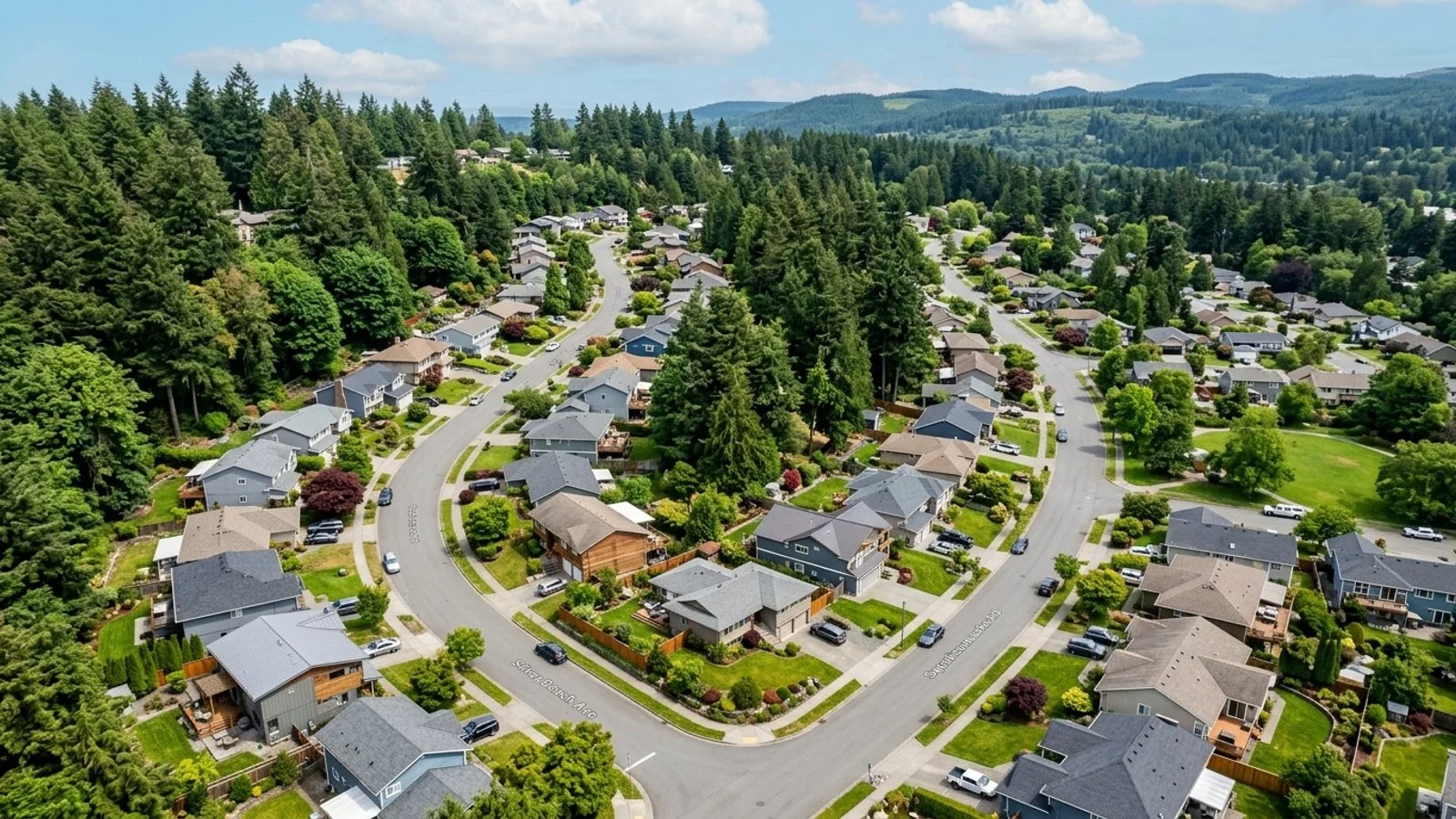
The median home sale price in Bellingham, WA sits around $662,000 as of late summer 2026. Homes are spending roughly 16 days on the market before going under contract - that's a pace that keeps everyone, especially first-time home buyers in Bellingham, on their toes.
Financing a home in Whatcom County means understanding how loan terms shape your monthly budget before you fall in love with a specific house. National headlines will tell you a lot about broad economic shifts, but what you need are practical strategies for your specific purchase.
Finding Current Mortgage Rates in Whatcom County
Rates move multiple times a day, driven by bond market activity and broader economic indicators. A number you read in a morning article might be irrelevant by lunch.
That's why a static figure on a website can't serve as a reliable quote for your purchase. What you'll pay depends on your personal financial profile and the exact moment you lock in - and only a lender can give you that number.
Where to Get Your Exact Number
You need a direct quote from a lender or an official Loan Estimate to know what you're looking at. These documents spell out the interest rate, annual percentage rate, and closing costs based on your specific application - not a hypothetical borrower.
A Loan Estimate also lets you compare offers side-by-side using standardized federal forms. That standardization matters because it makes it much harder for fees to hide.
Why Rates Move Daily
Lenders price their loans off the trading of mortgage-backed securities on the open market. When investors demand higher returns - because of inflation fears or economic uncertainty - borrowing costs go up for homebuyers. When the economic outlook cools, yields tend to drop.
You can watch these trends to get a sense of direction. But your personal quote is the only number that binds anyone to anything.
How Rate Changes Affect Your Buying Power in Bellingham
A Bellingham home priced at the local median of $662,000 doesn't cost the same every month depending on when you finance it. A half-percent shift in your rate changes the total cost of that home by thousands of dollars over a 30-year period - and it changes what you can qualify for in the first place.
Think in terms of monthly payment, not just purchase price.
An Illustrative Payment Comparison
Here's a concrete way to see it: assume a 20% down payment on a $662,000 home. At an illustrative 6% rate, your monthly principal and interest payment lands around $3,175. Move to 6.5% and that same payment rises to roughly $3,347. At 7%, you're looking at about $3,523 per month.
That's nearly $350 more every month for the same house. Over 30 years, it adds up to a number that deserves serious attention before you decide how much to offer.
Balancing Price and Monthly Cost
Buyers often face a real trade-off: lower purchase price versus lower monthly payment. When borrowing costs rise, demand sometimes cools and you may face less competition. When rates drop, more buyers show up and final sale prices tend to follow.
Neither scenario is automatically better. You have to weigh where you land personally - your income, your timeline, your tolerance for a competitive offer situation - to find a comfortable entry point.
Loan Types That Shape Your Monthly Payment
Before your credit score even enters the conversation, the type of loan you choose sets the baseline for your borrowing costs. A 30-year loan keeps monthly payments manageable by spreading them out; a 15-year loan typically carries a lower rate but asks for a larger payment every month.
Each program comes with its own pricing structure and qualification rules, so selecting the right product depends on your down payment size, whether you've served in the military, and how long you plan to stay in the home.
Fixed-Rate vs. Adjustable-Rate Mortgages
A fixed-rate mortgage locks your interest rate for the entire life of the loan. Your principal and interest payment never changes - which appeals to buyers who plan to stay in their Bellingham home for the long haul.
An adjustable-rate mortgage, or ARM, offers a lower introductory rate for a set period - typically five to ten years - before adjusting annually based on market conditions. Buyers who expect to sell or refinance before that introductory period ends often use ARMs to keep their initial payments lower.
Conventional, FHA, VA, and USDA Options
Conventional loans generally require strong credit and reward buyers who bring substantial down payments with competitive pricing. FHA loans are built for buyers with lower credit scores or smaller down payments, though they come with mortgage insurance premiums attached.
Eligible veterans and active-duty service members should look seriously at VA loans - they often carry lower rates and require no down payment. USDA loans offer zero-down financing for qualifying rural properties, though properties within Bellingham city limits generally don't qualify.
How to Secure the Best Possible Terms
Lenders reserve their best pricing for borrowers who look like the lowest risk on paper. That's not an opinion - it's how the pricing tiers work. The good news is that you have real influence over where you land.
The pre-approval phase is the right time to take action.
Improving Your Credit and Down Payment
Your credit score determines which pricing tier you qualify for. Paying down existing debt and correcting any errors on your credit report before you apply can move you into a better tier - sometimes meaningfully so.
A larger down payment also lowers your loan-to-value ratio, which reduces the lender's risk and can improve your rate. Some buyers also choose to pay discount points upfront, essentially trading a higher closing cost for a permanently lower monthly payment. Whether that math works for you depends on how long you plan to stay.
How Rate Locks Protect Your Purchase
A rate lock guarantees your quoted interest rate for a specific timeframe - usually 30 to 60 days - while your loan moves through underwriting. Once you have an accepted offer, you should request a lock so a sudden market shift doesn't change what you owe.
If conditions worsen before closing, your locked terms hold. Some lenders also offer a float-down option, which lets you capture a lower rate if the market improves before your closing date. It's worth asking about.
Choosing a Local Mortgage Lender in Bellingham
A pre-approval letter from a recognized Whatcom County lender carries real weight when a listing agent is reviewing your offer alongside others. Local professionals understand regional nuances - specific condo association rules, local property tax schedules - that a national call-center lender won't.
National lenders operate on volume across multiple time zones. A local loan officer is directly accountable to you and can usually troubleshoot an underwriting issue faster than a centralized corporate desk can even return a voicemail.
Questions to Ask Your Prospective Lender
Ask about average closing timelines. Ask how they handle communication outside standard business hours. In a market where homes are under contract in 16 days, you need someone who can update a pre-approval letter on a Saturday if the situation calls for it.
Also ask about their fee structures - origination fees, processing charges, all of it. Comparing those costs across institutions is how you find the most cost-effective option for your actual purchase.
Banks, Credit Unions, Brokers, and Direct Lenders
Retail banks and credit unions lend their own money and offer their own product suite - credit union membership sometimes comes with meaningful benefits. Direct lenders also underwrite their own loans but focus exclusively on mortgages rather than general banking services.
Mortgage brokers work differently: they don't lend their own funds, but instead shop your application across dozens of wholesale lenders. Getting quotes from more than one type of institution gives you a complete picture of what's available.
What Financing Trends Mean for Bellingham Sellers
With roughly 270 homes currently available in the Bellingham market, buyer demand is directly tied to the cost of borrowing. When financing costs rise, some buyers pause their search - and that shows up as fewer showings and fewer competing offers on your listing.
That said, Bellingham homes are currently selling for about 99% of list price despite fluctuations in borrowing costs. Sellers who understand the financing environment can set realistic expectations instead of being surprised by what the market returns.
Pricing Your Home for Current Demand
Price your property based on what active buyers can afford right now - not what homes sold for a year ago. A competitively priced home reaches buyers who are working within tighter monthly budgets, and those buyers are the ones writing offers.
If you're planning to sell and buy simultaneously, you also need to factor current borrowing costs into your next purchase. Sitting down with an agent to review your net proceeds will tell you exactly how much equity you can roll into your next down payment.
Mortgage Rate FAQs
What are mortgage rates today in Bellingham, WA?
It depends on your specific financial profile and the exact time you request a quote. Because rates change daily based on bond market trading, you should request a same-day Loan Estimate from a lender to see your actual number.
Should I wait for rates to drop before buying a home in Bellingham?
It depends on your personal timeline and housing needs. Waiting for lower borrowing costs can sometimes mean facing higher home prices and more competition from other buyers when the market accelerates.
How much does a 1% difference in a mortgage rate affect my buying power in the Bellingham market?
A 1% difference changes your monthly payment by hundreds of dollars. On a median-priced $662,000 Bellingham home, that shift can determine whether a specific property fits within your monthly budget or pushes you past your comfortable limit.
How do I get the best mortgage rate as a buyer in Bellingham?
Focus on improving your credit score, lowering your debt-to-income ratio, and saving for a larger down payment. Shopping around and comparing Loan Estimates from multiple local lenders also ensures you find the most competitive terms.
How do I choose a local mortgage lender in Bellingham, WA?
Interview a mix of local banks, credit unions, and mortgage brokers to compare their fees, communication styles, and loan products. A local professional familiar with Whatcom County real estate can often provide faster underwriting and smoother closings.
How do current mortgage rates impact how much I can sell my house for in Bellingham?
Higher borrowing costs generally reduce the number of buyers who can afford your home, which can cool bidding wars. However, with Bellingham homes currently selling for roughly 99% of list price, appropriately priced properties still command strong offers.
Getting Local, Rate-Smart Guidance
A successful purchase requires coordinating your property search with a solid financing strategy - and in Bellingham, where homes are averaging just 16 days on the market, having your pre-approval ready isn't optional. It's a basic requirement for submitting an offer.
A local real estate agent can help you map out your budget and connect you with trusted lending professionals in Whatcom County. Getting your team in place early means you're ready to move when the right property appears.
Talk to an Agent Before You Talk to a Lender
An agent gives you a clear picture of what homes cost in your target neighborhoods before you finalize your loan application. That context helps you and your lender land on the right number to apply for.
Your agent can also introduce you to lenders with a proven track record of closing on time in this specific market. In a competitive offer situation, those local connections often make the difference.