What to Expect When Buying a Home in Columbia, Bellingham, WA
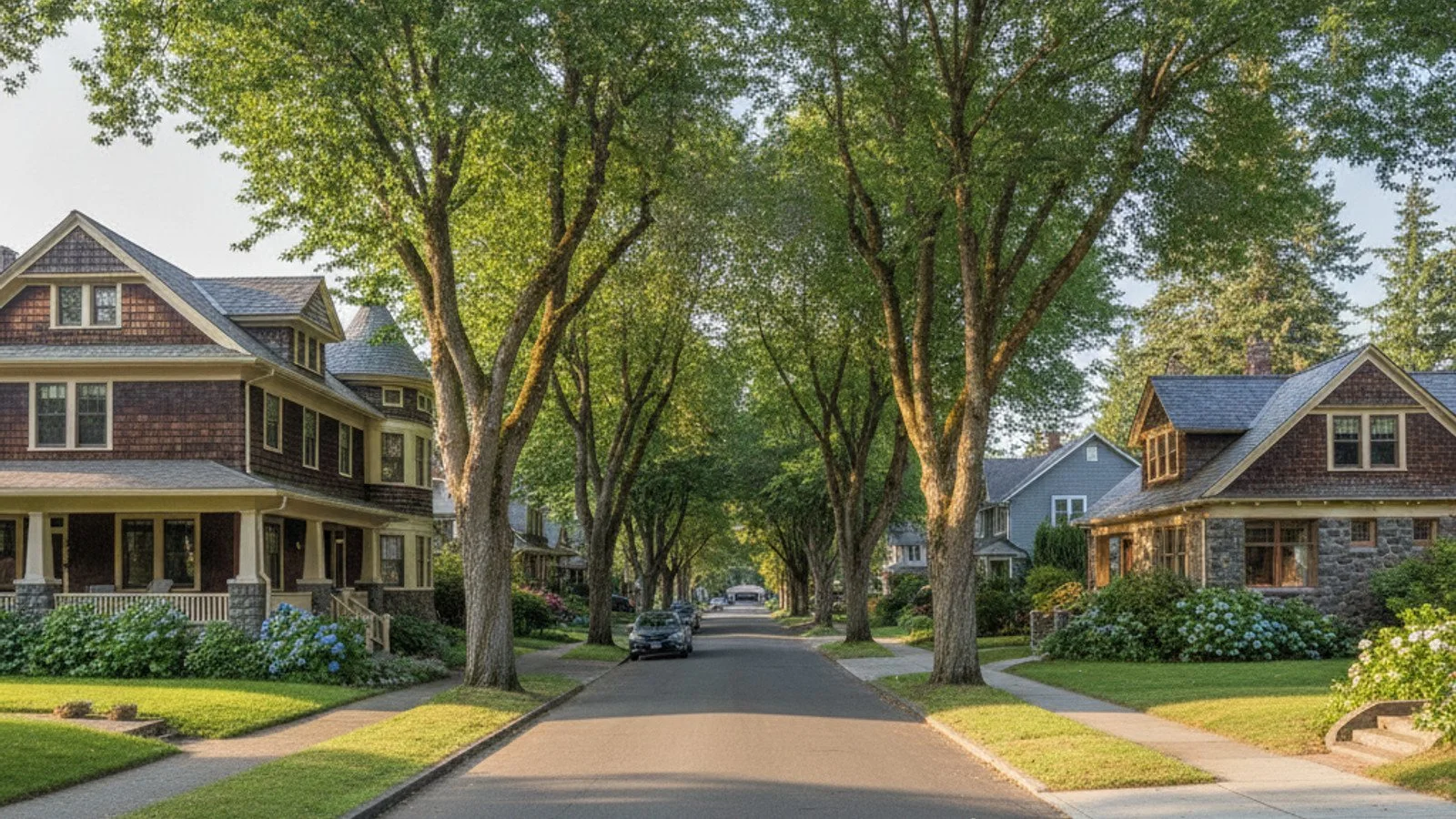
Bellingham, WA, has a lot of distinct pockets, and Columbia stands out among the best neighborhoods in Bellingham as one of the more established ones - well-rooted streetscapes, a central location, and a mix of historic and mid-century architecture sitting just northwest of downtown. It's not a neighborhood that reinvents itself every few years, which is exactly what draws a certain kind of buyer.
The market here moves fast. Bellingham homes are averaging roughly 12 days on the market as of mid-2026, so getting clear on housing costs, local amenities, and transit routes before you start touring isn't just good advice - it's the difference between writing an offer and watching someone else's sign go up.
An Overview of Columbia in Bellingham, WA
Columbia sits in the northwestern quadrant of Bellingham, bordered by major transit corridors and long-established residential blocks. The streets are gridded, lined with mature trees, and feel noticeably different from the city's newer developments - less polished, more permanent.
Access to local parks and commercial hubs is one of the things buyers mention first when they're drawn to this area. The district connects well to the rest of the city, and it's a regular fixture in Bellingham neighborhood guides for good reason.
Where Columbia is Located
The neighborhood's boundaries are defined by several main arterial roads that also handle most of the local traffic. Eldridge Avenue runs along the southern edge, and Meridian Street serves as the primary commercial and transit corridor to the east.
Northwest Avenue and W. Maplewood provide additional access, with a mix of multifamily buildings and commercial nodes near Birchwood Avenue. You can reach most of Bellingham through these routes without touching the interstate.
The Housing Setting and Local Parks
Most blocks in Columbia feature detached single-family homes on varying lot sizes, with sidewalks and mature landscaping that give the area a settled, unhurried feel. Private yards are common, and the streetscape reads as genuinely residential rather than transitional.
Elizabeth Park is the neighborhood's central gathering place and its clearest landmark. Dedicated in 1912 and dating back to 1883, it includes a gazebo, fountain, playground, and tennis and pickleball courts. Residents also use Carl Lobe Park and Lorraine Ellis Park for outdoor recreation.
Real Estate and Home Prices in Columbia
The broader Bellingham market sits at a median sale price of approximately $641,000, but Columbia tends to price above that. Data from late 2025 and early 2026 puts the neighborhood's median home values between $702,500 and $788,000, depending on the reporting source.
Inventory is tight across the city - roughly 200 homes available in the Bellingham area, with about a two-month supply of listings. More than half of all Bellingham homes sell above asking price, so if you're planning to lowball or take your time, Columbia isn't the place to test that strategy.
Home Types and Housing Stock
The housing stock here leans older - early 20th-century Craftsman homes, Victorian-era builds, and mid-century ramblers make up most of what you'll find. Large-scale new development isn't part of the picture.
Many of these houses retain original architectural details alongside updated interiors and detached garages. The W. Maplewood corridor adds some multifamily inventory to the mix.
New Construction and Property Attributes
There's almost no undeveloped land in Columbia, which means brand-new construction is rare. The real estate activity here is mostly renovation and preservation of existing homes - buyers looking for modern finishes are typically targeting fully remodeled historic properties rather than new builds.
One practical upside: homeowners associations are uncommon in this older neighborhood, so you'll generally have more flexibility with exterior modifications than you'd find in newer subdivisions.
Dining, Transit, and Daily Life in Columbia
You don't need to travel far for day-to-day errands here. Groceries, coffee, and casual dining are accessible without getting in a car, and Meridian Street connects the neighborhood to the Fountain District and the rest of the city's retail options.
Restaurants and Everyday Dining
The local food scene is low-key and practical. Goods Local Brews runs as a tap house with a taco food truck, and Narrative Coffee is the kind of daily stop that morning commuters build their routines around. Elizabeth Station covers pizza and craft beverages.
From there, Meridian Street and the Fountain District fill in the gaps - Zeeks Pizza, Diamond Jim's, Cascade Pizza, Mi Rancho Meat Market, and Menace Brewing are all in the mix.
Getting Around Town
Columbia's grid makes car and bike travel straightforward. Meridian Street and Northwest Avenue are the main routes for reaching Interstate 5 or heading south into downtown Bellingham, and public transit runs along those same commercial corridors.
The terrain in this part of the city is relatively flat, which matters more than people expect - it's the reason year-round cycling is actually realistic here rather than just a talking point.
Schools, Healthcare, and Weather in the Area
For buyers relocating from outside the Pacific Northwest, the regional climate is worth understanding on its own terms. It shapes everything from maintenance schedules to how residents actually use the parks. Local infrastructure - schools and medical facilities - rounds out the picture for families and anyone planning to put down real roots.
Bellingham Public Schools
Columbia is served by Bellingham Public Schools. The standard track starts at Columbia Elementary School, which has been the neighborhood school since 1925, then continues to Whatcom Middle School, and on to Bellingham High School for secondary education.
Hospitals and Medical Care
PeaceHealth St. Joseph Medical Center is the nearest major hospital, located at 2901 Squalicum Parkway. The facility has 251 beds, provides comprehensive regional medical services, and houses the Haggen Family Emergency and Trauma Center - a Level II trauma center.
Local Climate
Pacific Northwest climate means mild, wet winters and dry, comfortable summers. Bellingham Bay helps moderate temperature extremes, and the proximity to the water keeps things from swinging too hard in either direction.
Plan for consistent rain from late autumn through early spring. Summers bring long daylight hours and minimal precipitation - which is when residents actually get full use out of Elizabeth Park and the other outdoor spaces.
Buying a Home in the Columbia Neighborhood
Columbia has low turnover, and Bellingham's overall inventory is limited. That combination means preparation isn't optional - you need financing in order before you start touring, not after you find something you like.
With a citywide median of roughly 12 days on the market, hesitation tends to be expensive. Knowing the specific blocks and the pricing history in Columbia before you're in a competitive situation is where a knowledgeable local presence pays off.
Renting Versus Buying
Some buyers choose to rent in Columbia first before committing to a purchase, and the W. Maplewood corridor has apartment and multifamily options if that's the right call for you. It's a reasonable way to learn the neighborhood before you're locked in.
That said, buying here means a higher entry price than the Bellingham median. Whether that makes sense depends on where current interest rates land relative to local rental costs - it's worth running those numbers honestly rather than assuming one path is obviously better.
Working With a Local Agent
A local agent who knows Columbia can flag upcoming listings before they hit the broader market and give you real context on how specific renovations and updates affect value in an older housing stock. That context matters when you're evaluating a century-old home with a remodeled kitchen and a questionable roof.
The inspection process for homes of this age has its own nuances, and structuring a competitive offer in a fast-moving market is a different exercise than it would be in a slower one. Representation here isn't just a formality.
Frequently Asked Questions
How much do homes typically cost in the Columbia neighborhood of Bellingham, WA?
Homes in Columbia price above the Bellingham median of $641,000. Estimates from late 2025 and early 2026 place the neighborhood's median sale price between roughly $702,500 and $788,000. Where a specific home lands in that range depends on condition and exact location.
Are there strict historic preservation rules or zoning restrictions for remodeling older homes in Columbia?
It depends on the specific property and its historical designation. The neighborhood is largely free of homeowners associations, but you'll still want to consult the City of Bellingham's planning department on zoning and remodeling permits before assuming anything.
How does buying a house in the Columbia neighborhood compare to the nearby Lettered Streets?
Columbia has its own draws - Elizabeth Park, direct access to the Meridian Street corridor, and a mix of Craftsman and Victorian-era builds on established residential blocks. Median sale prices run between $702,500 and $788,000, which puts it in a similar range to other historic areas, though the specific amenities and street character differ.
Which Bellingham public schools are zoned for families living in the Columbia area?
The standard track through Bellingham Public Schools for Columbia residents runs from Columbia Elementary School to Whatcom Middle School to Bellingham High School.
How quickly do houses typically sell in Bellingham's Columbia neighborhood compared to the rest of the city?
Columbia moves at roughly the same pace as the rest of Bellingham, where the median time on market is around 12 days. With citywide inventory limited to about a two-month supply, well-priced homes in Columbia tend to attract offers quickly.
Is the Columbia neighborhood walkable to downtown Bellingham and the waterfront?
It's relatively walkable, though how walkable depends on which block you're on. The southern edge along Eldridge Avenue gives you the most direct access to the city center and waterfront areas.