What to Expect From Water Utilities in Bellingham, WA
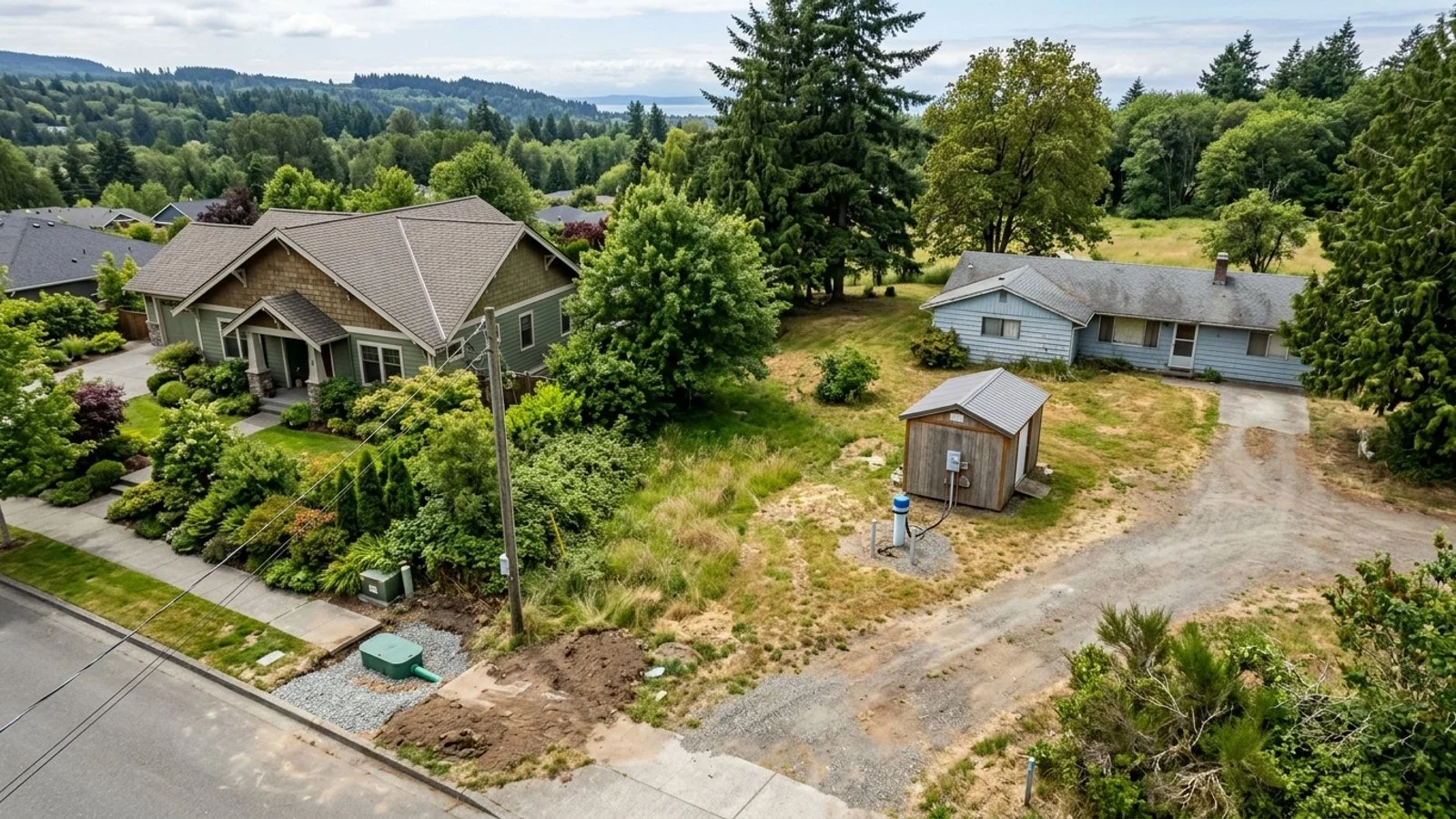
For anyone planning on living in Bellingham, WA, the median home sale price sits around $641,000 as of mid-2026, and properties are moving at roughly 12 days on market. If you're comparing homes inside the city limits with places further out in Whatcom County, you're also comparing two very different relationships with your water supply - and that difference shows up in your monthly budget, your maintenance calendar, and your peace of mind during a winter storm.
Homes closer to the center typically connect to the City of Bellingham Public Works Department. Rural properties run on private wells. That's the short version. Everything below unpacks what that actually means for what you'll spend and what you'll be responsible for.
Comparing City Water and Well Water in Bellingham
Municipal water systems treat and deliver water to your home for a monthly fee. The city handles the infrastructure; you pay the bill. Private wells put you in the role of your own utility provider - you're pumping groundwater from your own property, which means the testing, the maintenance, and the repairs land on you. The City of Bellingham Public Works Department serves most homes within the city limits.
Venture out into unincorporated Whatcom County and private wells become the norm. If you're looking at the roughly 200 homes currently in Bellingham's active inventory, verify the water source early. It changes the math on everything else.
At-a-Glance Differences
Municipal water means predictable monthly bills and essentially zero maintenance on your end. The city tests and treats the water before it ever reaches your tap. You pay your bill, and if a main line breaks in the street, you call the city.
Wells are a different arrangement entirely. No monthly consumption fee, but the water isn't free - the pump runs on electricity, the pressure tank and filtration system need upkeep, and when something fails, you're finding and paying a repair service yourself. Once you close, the whole apparatus is yours.
Defining Municipal and Private Water Sources
"City water well" is a phrase that occasionally trips buyers up, but these are two completely separate systems. The City of Bellingham draws its municipal supply primarily from Lake Whatcom, treats it at a central facility, and pushes it through miles of underground pipe to your tap. The city manages the pressure, the flow rate, and all the repairs along the way.
A private well is a hole drilled, driven, or dug into the ground on a specific property to reach the local aquifer. A motorized pump pulls the groundwater up into a pressure tank, which then pushes it through the household plumbing. From the wellhead down to the aquifer, the property owner owns all of it.
Identifying the Property's Water Source
If the home receives a monthly or bi-monthly water bill from the City of Bellingham Public Works Department, it's on the municipal system. Real estate listings usually note this in the utility section.
No water bill? Look for a wellhead in the yard - typically a PVC or metal pipe rising a few feet out of the ground with a heavy cap on top. The home will also have a pressure tank somewhere on the property, often in the garage, basement, or a utility shed.
Monthly and Long-Term Water Costs
A single-family household in Bellingham spends an average of $152 per month on all water utilities combined in 2026. That figure reflects recent rate increases the city approved to maintain infrastructure and the watershed. It's a predictable number, which matters when you're building out a monthly housing budget.
The city bills usage per 100 cubic feet (CCF). For a single-family home, the in-city rate is $1.53 per CCF up to 22 units, then rises to $1.80 per unit - that includes a $0.27 Lake Whatcom Watershed fee. Translated to something more intuitive, that's roughly $3.69 per 1,000 gallons.
Expenses for Private Systems
Well owners don't pay a monthly consumption fee, but the pump draws electricity every time water moves through the house, so expect that to show up on your power bill. How much depends on how much water your household uses.
The bigger variable is maintenance. A failing well pump or a filtration system that needs replacement comes as a lump-sum expense - not spread across twelve monthly bills, but all at once. And if your property has a septic system, which often accompanies a well, factor in regular pumping fees paid to a local service company. These costs are real; they just don't arrive on a predictable schedule.
Health Standards and Water Quality Testing
The City of Bellingham tests its municipal supply continuously to meet federal and state safety standards. Treatment removes contaminants and balances water chemistry before anything enters the distribution system. Residents receive an annual water quality report with the detailed results.
Private well owners are on their own for this. The Whatcom County Health and Community Services department, located at 509 Girard Street, publishes guidelines on what to test for - but the homeowner has to initiate and pay for the lab work. Testing isn't optional if you want to know what's coming out of your tap.
Managing Private Water Quality
Groundwater in Whatcom County can carry naturally occurring minerals like iron or manganese, which show up as hard water or minor staining on fixtures. Many well owners address this with water softeners or reverse osmosis filtration systems, both of which require regular filter changes and, for softeners, salt top-offs.
Annual testing for bacteria and nitrates is the baseline. During your inspection period, request a comprehensive water quality test - it tells you exactly what treatment systems the home might need. Finding a problem before closing gives you room to negotiate repairs or credits. Finding it after closing gives you a bill.
The Trade-Offs of a Private Well System
A private well means you're not subject to municipal rate hikes. During heavy summer irrigation, you won't hit the tiered pricing penalties that city residents see. The water belongs to the property as long as the aquifer supports it.
That independence, though, comes with direct accountability. A pump that fails on a holiday weekend means finding an emergency repair service on your own dime, on your own timeline. There's no city hotline to call.
Power Outages and Water Access
Municipal water keeps flowing even when the home loses electricity - the city maintains pressure in the main lines, so you still have running water and working plumbing during a storm. Most city residents never think about this.
Well systems are entirely dependent on the home's electrical supply. When power goes out in a rural Whatcom County neighborhood, the water stops unless the property has a backup generator wired to the well equipment. If you're moving from a city home to a rural property with a well, that's a real adjustment worth preparing for before the first windstorm.
Converting a Property to the Municipal System
Properties near the city limits sometimes have the option to decommission a private well and connect to the municipal water main. That starts with an application through the City of Bellingham Public Works Department. The city looks at the property's location and the capacity of the nearest main line before approving anything.
From there, you're looking at connection fees, permits, and a contractor to trench the new water line from the street to the house. The total cost varies considerably depending on how far the home sits from existing municipal infrastructure. Some neighborhoods coordinate joint connections to split the trenching costs across multiple properties.
Keeping Both Systems
Some properties run municipal water indoors and keep the private well for outdoor irrigation. It reduces the monthly city water bill during irrigation season and gives you agricultural water independence without giving up the reliability of treated water for drinking and plumbing.
That setup requires specific backflow prevention devices - mechanisms that keep untreated well water from accidentally cross-contaminating the city's supply. The city requires annual testing of these backflow valves to stay in compliance.
Evaluating a Well During a Home Purchase
A standard home inspection won't tell you much about the well. General inspectors will turn on the taps to check pressure, but they don't evaluate the pump, the pressure tank, or the aquifer's recovery rate. For that, you need a specialist.
Hiring a well inspector is standard practice for rural transactions in Whatcom County. They'll check the pressure tank, measure the well's recovery rate, and confirm the system can handle everyday household demand. A flow test tells you whether the well can keep up with normal living without running dry.
Reviewing County Records
The Whatcom County Health and Community Services department keeps drilling logs and past permits on file. Those records show you how deep the well is and when it was originally installed - useful information if you're trying to gauge how much life the pump has left.
Ask the seller for maintenance records on any water filtration systems in the home. Knowing when the UV light was last replaced or when the water softener was last serviced helps you plan your first year of ownership. A seller who has those records is a seller who paid attention.
Frequently Asked Questions
How do I transfer water and trash services into my name when buying a house in Bellingham, WA?
Contact the City of Bellingham Public Works Department to set up your municipal water account. Escrow companies typically handle the final billing transfer for city utilities on closing day, so you start with a clean slate.
Who are the primary electricity and natural gas providers for Bellingham residents?
Check with your real estate agent or review the seller's disclosures to identify the specific providers for the property. Many rural Whatcom County homes run on delivered propane rather than piped natural gas.
How are final City of Bellingham utility bills handled through escrow on closing day?
Escrow manages the final utility readings and payments directly. The seller is responsible for all water used up to the closing date, and the City of Bellingham Public Works Department account transfers to you from there.
What is the average monthly cost for basic utilities in a Bellingham single-family home?
For water utilities specifically, a single-family home in Bellingham averages $152 per month in 2026. Electricity and internet costs vary depending on the home's size, age, and location.
Which internet companies offer fiber-optic service to Bellingham neighborhoods?
Availability depends entirely on the specific address and neighborhood infrastructure. Check individual provider coverage maps during your inspection period to confirm what service actually reaches the house.
Will I be on city water and sewer if I buy a home in the Bellingham Urban Growth Area (UGA)?
It depends on the specific property and how close it sits to existing infrastructure. Some homes in the UGA connect to the City of Bellingham Public Works Department; others still rely on private wells and septic systems.